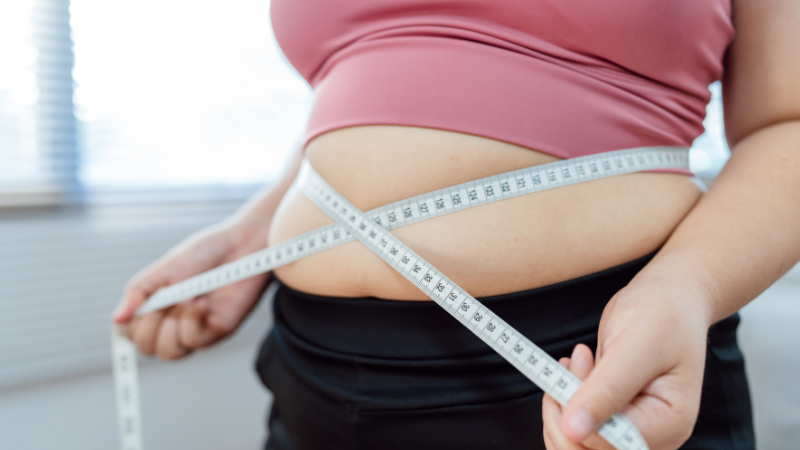
You’re not imagining it. Your belly feels fuller, your waist is disappearing, and no matter how “healthy” you eat or how hard you try to move more, things aren’t shifting like they used to. It’s frustrating—but more than that, it can feel defeating.
The truth is: your body is going through a major transformation during the menopause transition. And yes, it often shows up around your midsection first. But this isn’t just about eating less or exercising more. Let’s take a closer look at what’s really going on—because once you understand the why, you can start supporting your body in a way that actually works.
1. Your Sleep-Wake Rhythm and Hormonal Signals Are Out of Sync
One of the first things many women notice is that sleep becomes lighter, shorter, or disrupted altogether. And that alone can trigger a cascade of hormonal imbalances. When you’re not sleeping well, cortisol (your stress hormone) stays high, melatonin (your sleep hormone) stays low, and the body doesn’t get to fully repair or regulate itself overnight. This impacts your blood sugar, your mood, your cravings, and your metabolism the next day—and over time, this adds up.
We need consistent, good-quality sleep to balance hormones like leptin, ghrelin, insulin, and even estrogen. If sleep is constantly disrupted, weight gain—especially around the belly—is much more likely.
2. Your Liver Is Struggling to Keep Up
The liver is a detox powerhouse, responsible for breaking down not only alcohol and medications but also excess hormones, environmental toxins, and inflammatory by-products. During menopause, when estrogen levels are changing and synthetic or environmental estrogens (like xenoestrogens from plastics or cosmetics) are still coming in, the liver has more to do.
But if it’s overloaded—due to stress, poor sleep, processed food, or years of exposure to chemicals—it can’t keep up. That’s when these excess estrogen-like substances get stored in fat cells, especially around the belly and hips. Plus, fat cells themselves can produce estrogen, which further feeds the imbalance.
Supporting liver function gently through real food, movement, stress reduction, and good hydration can make a huge difference.
3. Your Body Is in a Chronic Stress Mode
We often underestimate how much stress we carry—mentally, emotionally, and physically. And chronic stress is a major driver of hormonal imbalance. When cortisol is elevated for too long, it can block fat-burning, increase fat storage (especially in the abdomen), and disrupt your sleep-wake cycle.
Here’s the other part many women don’t know: progesterone and cortisol share the same building blocks. So, when the body is busy making cortisol all day, it often does that at the expense of progesterone—which is already declining in perimenopause.
The result? You may feel more anxious, sleep worse, gain belly fat, and feel like your nervous system is always on high alert. Reducing daily stress (mentally and physically) isn’t optional during menopause—it’s essential.
4. Low Vitamin D Can Exaggerate Symptoms
Vitamin D isn’t just for bones—it’s actually more like a hormone, and it plays a big role in mood, immunity, estrogen sensitivity, and even sleep. It helps with melatonin production and supports serotonin, the “feel-good” neurotransmitter. But here’s the kicker: estrogen helps activate vitamin D. So when estrogen drops, your vitamin D absorption and activation may drop too.
Low vitamin D is common in midlife and is associated with worse sleep, lower mood, more fatigue, and increased hot flushes. All of these symptoms—when combined—can indirectly contribute to weight gain by disrupting your daily rhythms, energy levels, and food choices.
Getting your levels checked and safely increasing sun exposure or supplementation (as recommended) is worth it.
5. Silent Inflammation Makes Fat Storage Easier
One of the lesser-known aspects of menopause is that it accelerates a process called “inflammaging” — low-grade, chronic inflammation that slowly builds over the years and becomes more active as hormone levels shift.
This inflammation affects your gut, your joints, your liver, your muscles, and your metabolism. It can be triggered by years of stress, processed foods, over-exercising, under-recovering, chemical exposure, and even poor sleep.
And inflammation makes the body hold onto fat more stubbornly—especially visceral fat (around the belly). This kind of fat isn’t just storage; it’s active tissue that can produce hormones, affect insulin sensitivity, and further increase inflammation. It’s a vicious cycle. That’s why focusing on an anti-inflammatory lifestyle—through nutrition, movement, rest, and emotional support—is so powerful in this phase of life.
Bottom line? You’re not broken. You’re adapting.
Your body is doing its best with what it’s been given. But midlife is the time to shift the way you support it—gently, wisely, and with deep respect for what it’s gone through. It’s not about pushing harder. It’s about understanding better.
If you’re ready to reset, it starts with small steps: better sleep, less stress, gentle liver support, and truly nourishing your body instead of punishing it.
Your hormones may be shifting, but your power isn’t gone—it’s just waiting to be realigned.
References
This article is based on current research in endocrinology, sleep science, stress physiology, and aging. Selected references include:
- Franceschi, C., & Campisi, J. (2014). Chronic inflammation (inflammaging) and its potential contribution to age-associated diseases. The Journals of Gerontology: Series A, 69(Suppl_1), S4–S9. https://doi.org/10.1093/gerona/glu057
- Hirotsu, C., Tufik, S., & Andersen, M. L. (2015). The interaction between sleep and the HPA axis in the context of stress and sleep disorders. Endocrine Reviews, 36(3), 239–256. https://doi.org/10.1210/er.2014-1048
- Labrie, F. (2015). All sex steroids are made intracellularly in peripheral tissues by the mechanisms of intracrinology after menopause. The Journal of Steroid Biochemistry and Molecular Biology, 145, 133–138. https://doi.org/10.1016/j.jsbmb.2014.06.003
- Lovejoy, J. C. (2003). The menopause and obesity. Primary Care: Clinics in Office Practice, 30(2), 317–325. https://doi.org/10.1016/S0095-4543(03)00012-0
- Muscogiuri, G., Barrea, L., Aprano, S., Framondi, L., Di Matteo, R., Laudisio, D., … & Colao, A. (2019). Vitamin D and sleep regulation: is there a role for vitamin D supplementation in sleep disorders? Nutrients, 11(10), 2401. https://doi.org/10.3390/nu11102401
- Viau, V. (2002). Functional cross-talk between the hypothalamic–pituitary–gonadal and –adrenal axes. Journal of Neuroendocrinology, 14(6), 506–513. https://doi.org/10.1046/j.1365-2826.2002.00798.x