As a Health Coach and Personal Trainer, I’ve worked with countless women in midlife who are committed to their health, train regularly, and still find themselves feeling stuck. They’re tired. They’re not recovering well. Their usual training routine suddenly feels like too much—and nothing they do seems to shift the weight or restore their energy.
This isn’t about doing something wrong. It’s about the body responding differently because of hormonal changes that affect how we sleep, recover, and maintain muscle. The same strategies that worked in the past often stop working during the menopause transition—and trying to push harder only makes things worse.
Let’s take a look at what’s really going on behind the scenes.
Recovery in Midlife Isn’t Just Nice to Have—It’s Essential
With declining estrogen comes a shift in how our body handles inflammation and repair. Estrogen is deeply involved in muscle strength, joint health, blood flow, and tissue recovery. When it drops, inflammation can increase—not just in joints and muscles, but also in organs like the liver and gut.
For women who are pushing themselves through intense workouts, poor sleep and chronic stress can create a loop of ongoing fatigue and inflammation. Instead of getting stronger, they feel more worn down. This isn’t laziness or weakness—it’s biology. And it needs a new approach.
When Heavy Training Stops Helping
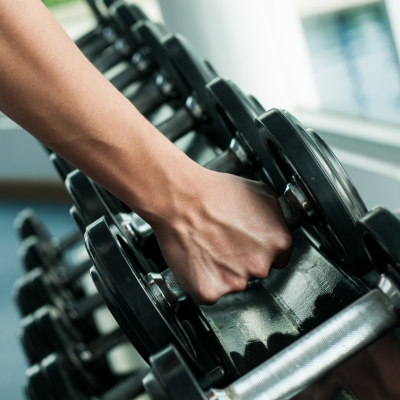
Strength training has major benefits, especially for bone density and metabolic health. But the intensity and structure of workouts matter more during menopause. Many women who’ve trained hard for years hit a wall where their recovery time increases, and their energy tanks.
If sleep is disrupted and recovery is incomplete, heavy lifting can lead to more harm than good. The solution isn’t quitting—it’s adjusting. Less volume, smarter programming, and better recovery strategies are often needed before the body can respond positively again.
Hormonal Shifts and Muscle Changes
Estrogen supports fast-twitch muscle fibers—the ones responsible for strength and power. As estrogen declines, these fibers become harder to maintain. Combined with changes in insulin-like growth factor (IGF-1), which supports muscle growth, women may notice they lose strength more quickly and struggle to rebuild it.
Add to this the impacts of low vitamin D (which affects calcium uptake and muscle contraction), iron deficiency (especially in women with irregular bleeding), gut health issues, and chronic stress—and the result is a body that isn’t set up to repair or grow muscle easily.
Sleep: The Forgotten Training Tool
We don’t build strength during a workout—we build it during rest. And high-quality, deep sleep is where true muscle recovery happens.
Growth hormone, which is essential for tissue repair, is released during the first phase of deep sleep. If night sweats, insomnia, or stress are disrupting that cycle, recovery will stall. That means more soreness, lower energy, and slower progress—no matter how good the workout program is.
Exercise Should Support You—Not Drain You
What I remind my clients again and again: your workouts should leave you feeling better—not broken. If you’re finishing every session exhausted, moody, or in pain, something’s off.
In midlife, it’s often more effective to focus on consistency, recovery, and joint-friendly movement than on pushing to extremes. That might mean dialing back the intensity for a while—not as a sign of failure, but as a smart step toward balance.
The key is to stop treating rest as optional.
Final Thoughts
Menopause brings real, biological changes—but it also offers a powerful opportunity to reconnect with your body’s needs. If you’ve been stuck in the “train harder” mindset and it’s not working, maybe it’s time to train smarter.
How that looks exactly? That depends on your symptoms, your lifestyle, and how well your body is currently recovering. If you want support with that, my program is designed to help you adjust your approach step by step—so your training starts working for you again.
References
This article is informed by current research in exercise physiology, hormonal aging, and women’s health during the menopause transition. Selected sources include:
- Maltais, M. L., Desroches, J., & Dionne, I. J. (2009). Changes in muscle mass and strength after menopause. Journal of Musculoskeletal & Neuronal Interactions, 9(4), 186–197. https://pubmed.ncbi.nlm.nih.gov/19949271/
- Graf, S. A., et al. (2019). Growth hormone release during sleep in women across the lifespan: Effects of age and menopausal status. Journal of Clinical Endocrinology & Metabolism, 104(6), 2225–2235. https://doi.org/10.1210/jc.2018-01959
- Enns, D. L., & Tiidus, P. M. (2010). The influence of estrogen on skeletal muscle: Sex matters. Sports Medicine, 40(1), 41–58. https://doi.org/10.2165/11319760-000000000-00000
- Phillips, S. M. (2014). A brief review of critical processes in exercise-induced muscular hypertrophy. Sports Medicine, 44(1), 71–77. https://doi.org/10.1007/s40279-014-0152-3
- National Sleep Foundation (2020). How sleep affects recovery and muscle growth. https://www.sleepfoundation.org/physical-health/how-sleep-affects-muscle-growth
- American Heart Association (2023). Physical Activity Recommendations for Adults and Older Adults. https://www.heart.org/en/healthy-living/fitness/fitness-basics/aha-recs-for-physical-activity-in-adults